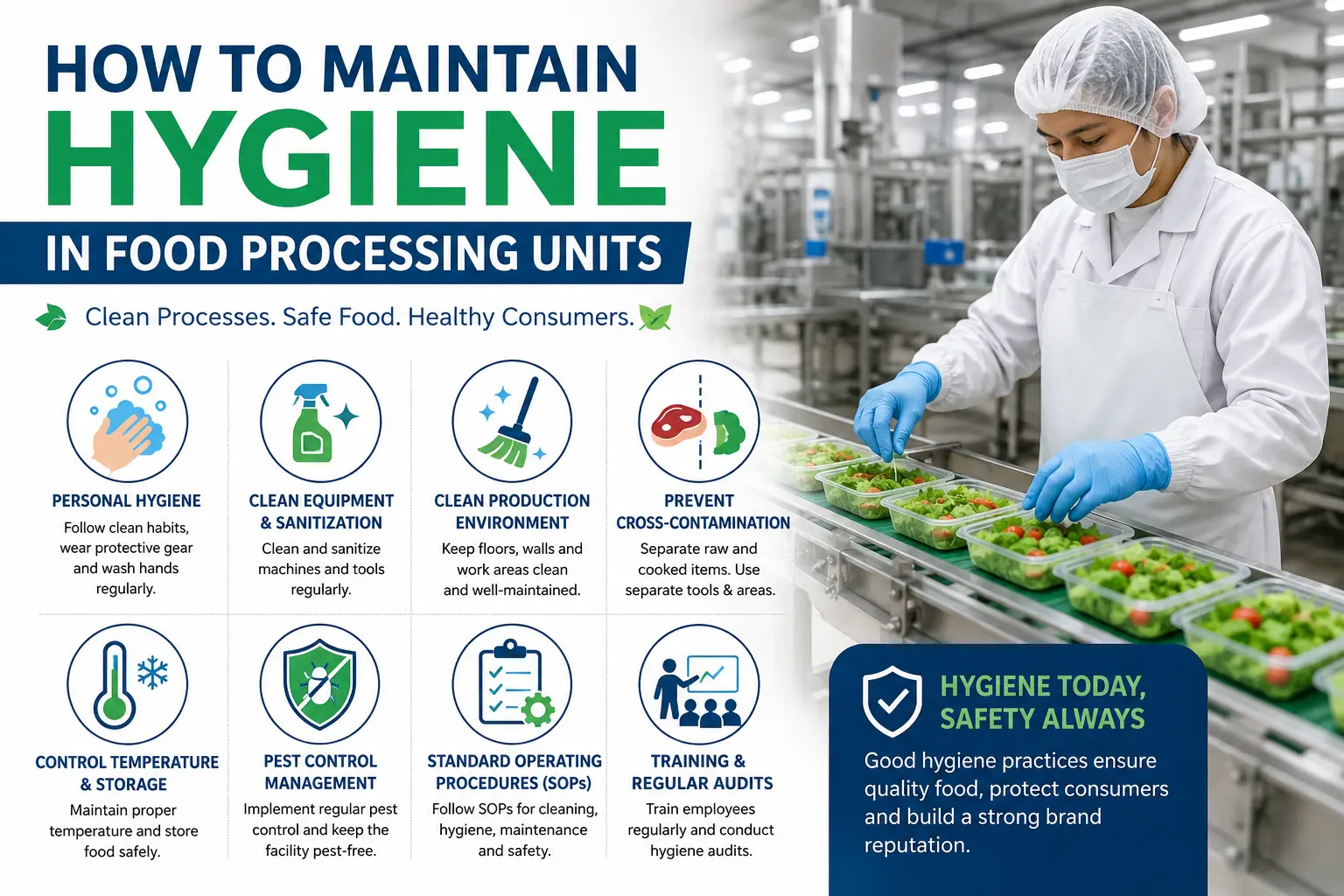
How to Maintain Hygiene in Food Processing Units: A Complete Guide for Safe & Quality Food Production
In the food industry, hygiene is not just a requirement — it is the backbone of product quality, consumer safety, and business reputation. Food processing units must follow strict hygiene practices to prevent contamination, maintain compliance, and ensure the delivery of safe products to consumers.
Whether you operate a bakery, dairy plant, meat processing facility, or commercial kitchen, understanding how to maintain hygiene in food processing units is essential for long-term operational success.
Why Hygiene Matters in Food Processing Units
Food processing environments handle raw ingredients, machinery, packaging materials, and human interaction daily. Without proper hygiene control, businesses risk:
- Food contamination
- Bacterial growth and cross-contamination
- Product recalls
- Regulatory penalties
- Loss of customer trust
Maintaining hygiene ensures products remain fresh, safe, and compliant with food safety regulations.
1. Establish Strong Personal Hygiene Practices
Employees are one of the biggest factors influencing food safety. Proper personal hygiene minimizes contamination risks.
Essential Personal Hygiene Rules:
✔ Wear clean uniforms, gloves, masks, and hairnets
✔ Wash hands regularly using approved sanitizers
✔ Avoid jewelry, perfumes, and loose accessories
✔ Cover wounds and cuts immediately
✔ Maintain strict illness reporting protocols
Regular hygiene training helps employees understand their role in maintaining food safety standards.
2. Implement Effective Equipment Cleaning & Sanitization
Food processing equipment can accumulate grease, food particles, bacteria, and residue if not cleaned correctly.
Best Cleaning Practices:
- Clean machines after every production cycle
- Use food-grade cleaning chemicals
- Follow scheduled sanitation procedures
- Disassemble equipment for deep cleaning when necessary
- Verify cleaning effectiveness through inspections
Critical machinery such as mixers, slicers, ovens, conveyors, and filling systems require routine sanitation to prevent microbial buildup.
3. Maintain a Clean Production Environment
The overall facility environment directly impacts hygiene levels.
Focus Areas for Facility Cleanliness:
- Floors, walls, and ceilings
- Air filtration and ventilation systems
- Waste disposal zones
- Storage rooms and loading docks
- Drainage and water systems
Regular housekeeping reduces dust, moisture accumulation, pest attraction, and contamination risks.
4. Prevent Cross-Contamination
Cross-contamination occurs when harmful microorganisms transfer between raw materials, equipment, surfaces, or personnel.
Ways to Reduce Cross-Contamination:
✔ Separate raw and finished product zones
✔ Use color-coded cleaning tools and containers
✔ Maintain dedicated storage areas
✔ Sanitize surfaces between production batches
✔ Implement controlled workflow movement
Segregation is especially important in meat processing, dairy manufacturing, and ready-to-eat food production.
5. Control Temperature & Storage Conditions
Improper storage temperatures create ideal conditions for bacterial growth.
Safe Storage Guidelines:
- Monitor refrigeration and freezer temperatures regularly
- Store ingredients according to manufacturer recommendations
- Use FIFO (First-In, First-Out) inventory management
- Keep dry goods in moisture-free environments
- Record temperature logs consistently
Proper cold chain management preserves freshness, flavor, and product safety.
6. Strengthen Pest Control Management
Pests pose a serious threat to food safety and operational compliance.
Effective Pest Prevention Measures:
✔ Seal entry points and cracks
✔ Maintain clean waste disposal systems
✔ Conduct scheduled pest inspections
✔ Use approved pest management solutions
✔ Monitor storage and receiving areas
A proactive pest control program significantly lowers contamination risks.
7. Develop Standard Operating Procedures (SOPs)
Documented hygiene procedures create consistency across operations.
SOPs Should Cover:
- Cleaning schedules
- Sanitization methods
- Employee hygiene rules
- Equipment maintenance
- Emergency contamination response
Clear SOPs help teams maintain accountability and simplify regulatory audits.
8. Conduct Regular Hygiene Audits & Staff Training
Continuous improvement is essential in food safety management.
Recommended Practices:
- Perform internal hygiene inspections
- Schedule third-party audits
- Provide refresher employee training
- Monitor compliance performance
- Update procedures based on regulations
Frequent evaluations help identify risks before they affect production quality.
Benefits of Maintaining Hygiene in Food Processing Units
Strong hygiene management delivers measurable business advantages:
✅ Improved food quality and consistency
✅ Reduced contamination incidents
✅ Regulatory compliance assurance
✅ Extended equipment lifespan
✅ Higher customer satisfaction and trust
✅ Increased operational efficiency
Clean operations support both food safety and business growth.
Final Thoughts
Maintaining hygiene in food processing units requires more than occasional cleaning — it demands a structured, proactive approach involving personnel, equipment, facilities, and operational systems.
By implementing strong sanitation protocols, employee training, contamination controls, and regular monitoring, food manufacturers can create safer production environments and deliver superior products to consumers.
A hygienic food processing facility is not just good practice — it is a competitive advantage in today’s quality-driven food industry.
Keywords: Food Processing Hygiene, Food Safety Standards, Equipment Sanitization, Personal Hygiene in Food Industry, Food Manufacturing Cleanliness, HACCP Compliance, Food Plant Sanitation, Contamination Prevention, Safe Food Production, Industrial Food Hygiene.
← Back to Blog